
Teak and bamboo are two of the most sought-after materials due to their durability. However, both woods possess unique qualities that allow them to be used in a range of applications.
Is one better than the other?
While their durability seems comparable, the main difference between teak and bamboo lies in their price. It stems from how each wood is sourced and manufactured. Teak is expensive because it takes a lot of years to grow, while bamboo grows quickly, making it cheaper.
That said, it is important to understand how these two woods cope with environmental challenges. While bamboo has a higher hardness rating than teak, the latter is commendable for its inherent resistance to moisture and pests.
In this post, we will look at the comparisons between teak and bamboo to help you decide which wood will be better for your next woodworking project.
Teak vs. Bamboo
Both teak and bamboo are useful in many applications. That said, they have a distinct set of characteristics and properties that make one better than the other. Depending on how you’re going to use these wood materials, consider these factors:
Durability
When it comes to durability, teak wood is hands down one of the best options for anything woodworking. Teak is a dense wood used in a wide range of applications due to its exceptional durability, and natural resistance to moisture and rot.
On the Janka Hardness scale, true teak (and not those grown in South America) has a rating of 1000 to 1155 lbs. That’s softer than bamboo which has a Janka scale rating of 1,700 for vertical bamboo and 4,600 for strand bamboo.
However, teak’s durability is mainly attributed to its natural oils, which keep pests at bay. Plus, it can resist moisture and extreme weather conditions.
In terms of hardness, though, bamboo is a clear winner. It’s also lightweight and easy to cut. But take note: its hardness can dull your knife blades. Bamboo can resist moisture but it’s not as waterproofing as teak. It simply cannot stand against elements and rot because it doesn’t have the natural oils that protect teak against it all.
Aesthetics
Floorings, boat decks, and furniture, teak it is. This wood is known for its rich, warm hues that add a luxurious touch to any space. The golden brown color fades over time, but it can turn into a lovely silver patina. The unique grain patterns on teak are typically straight.
Traditional bamboo planks have the grass’s joints and knuckles. They can mimic the look of hardwood due to the uneven grains. Bamboo comes in color variations but it’s mostly light, although it can be stained in cherry or gray. Manufacturers use carbonization to achieve a darker hue, which is something that naturally has.
Sustainability
Bamboo is basically a grass. It grows itself from cut stalks, so there’s no need to replant it. This also means that it grows fast, which is why it’s considered to be eco-friendlier than teak. However, the way the bamboo planks used in flooring isn’t all that green.
Boards and planks made from bamboo are chemically treated. The adhesives used to bind them are mostly sourced from China and aren’t always environmentally friendly. It also consumes energy because it’s fibrous and the bamboo fibers need to be separated and boiled/soaked in water.
Teak trees, on the other hand, is easier to make into planks. It just needs to be cut and milled. But they take so long to mature (between 25 to 30 years) while bamboo only takes up to 6 months and it will be ready for harvest.
The time-consuming growth of teak wood is also why it’s so expensive. It’s hard to source. This is also why illegal logging is still a problem in Southeast Asia where teak wood is sourced.
Cleaning and Maintenance
Teak and bamboo are easy to upkeep. Teak, especially, is very low maintenance but still requires some care. You can clean and maintain the teak every 6 months, but it will depend on the grade of the teak. To clean it, all you need is soap and water and add oil once it’s dry.
Bamboo requires sealer because it’s not as water-resistant as teak. If you have a bamboo shower bench or flooring, it needs to be sealed several times a year. Doing so will keep its waterproofing properties and protect the wood from pests.
It’s also important to note that once bamboo begins to rot, there’s no way you can reverse it. But teak will keep its natural beauty and durability and can last for decades if properly cared for.
Cost
Because bamboo is easier to grow and source, it is a lot cheaper than teak. You can find furniture made of bamboo at a range of affordable prices. Teak is considered to be a premium hardwood due to its durability and beautiful natural color and grains.
That said, teak is expensive, which makes bamboo a more economical alternative.
FAQs
What’s Better: Teak or Bamboo?
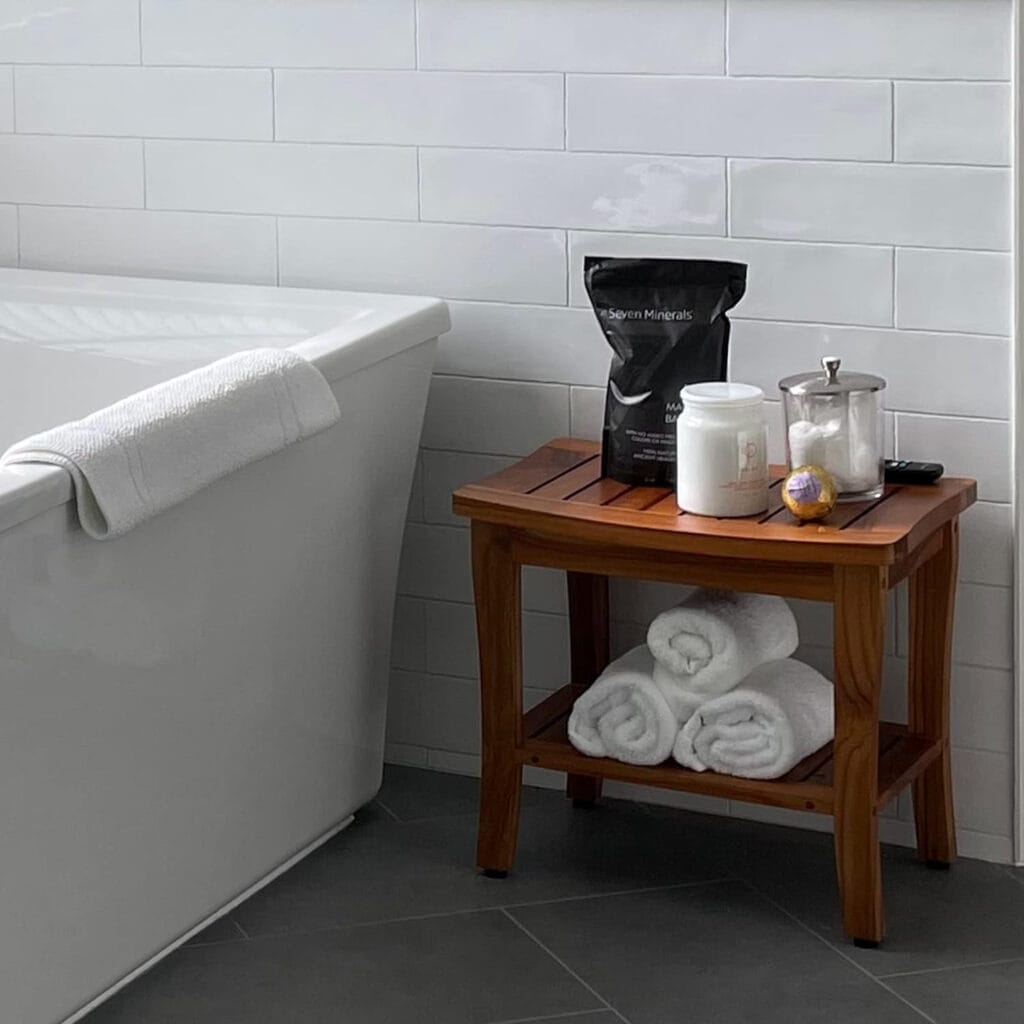
Teak wood is a great choice if you want extremely sturdy and weather-resistant wood for your shower benches, utensils, bath mats, and outdoor furniture. However, bamboo is regarded for its sustainability though not as sturdy as teak.
If you want to opt for bamboo shower benches, they are still durable and require minimal upkeep. It’s also a great choice if you’re looking for a cheaper alternative to teak.
Is Bamboo As Waterproof as Teak?
Bamboo benches are waterproof. Teak shower benches’ durability and water resistance are still superior to bamboo shower benches. A bamboo shower bench simply doesn’t repel water the way that teak benches do.
Teak wood is exceptionally water resistant, which is why it’s used mostly in outdoor woodworking such as boat building, and outdoor furniture.
Which Is Better Teak or Bamboo Cutting Board?
When it comes to choosing cutting board materials, teak offers more durability. It can take a lot more beating than bamboo. Teak cutting boards will scar over time but it’s very minimal. Bamboo cutting boards, while fairly durable, can cause knives to dull faster. So, teak would be a better choice if you can splurge.
Conclusion
Considering the wide range of uses and distinct properties of both wood, it’s clear that teak and bamboo have their own set of pros and cons.
Teak’s overall durability and its ability to withstand moisture and pests make it a wonderful choice for different applications such as teak shower benches and other outdoor furniture. The wood’s beautiful natural patterns and golden brown hues are a plus. However, it’s not very eco-friendly and can poke a hole in your pocket.
If you want a sustainable, budget-friendly option, bamboo would be a viable choice. Compared to teak, you might be compromising durability but it’s still a great material that is also versatile.
We hope you’ve found this post helpful in deciding which wood to use in your next project. But regardless of your choice, please know that either of these two wood species will make useful and beautiful woodworking projects.
If you have more questions, let us know and we’ll be happy to help you. Thanks for reading!