
Do you ever wonder how to treat a teak cutting board? You’re not alone. As someone who uses it daily, I worry that regular usage and washing can lead to mold growth or, worse, rot. Fortunately, I learned that caring for your wooden cutting board is fairly straightforward.
Treating teak cutting boards involves two important steps. The first one is cleaning the surface by removing food waste. The second one is to oil the wood to prevent the board from drying out.
This article will cover the steps to treating teak cutting boards. I’ll also share some tips on wood care and maintenance.
How To Treat a Teak Cutting Board?
Follow the steps below to treat a teak wooden cutting board and prolong its lifespan.
What Are the Tools Needed to Take Care of Teak Boards?
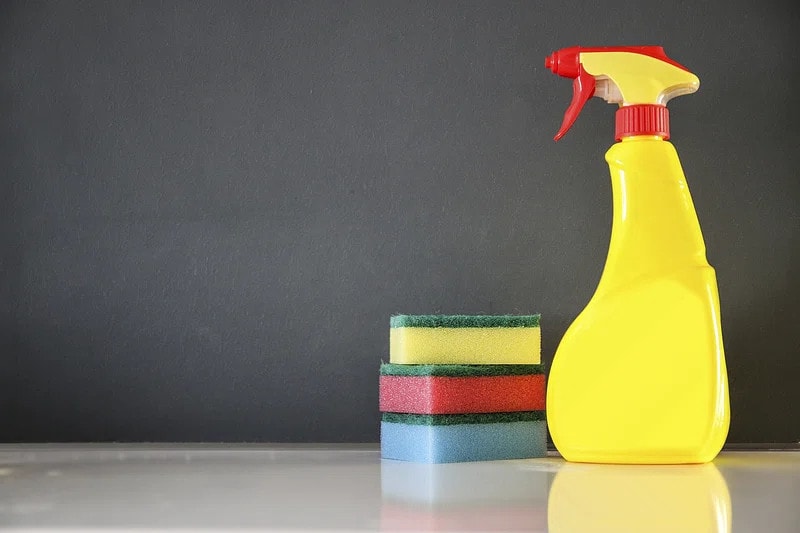
The first thing to do is to prepare the necessary tools for treating teak wood boards. Familiarize yourself with these items to simplify the process.
- Water
- Dish soap
- White vinegar (a natural disinfectant to eliminate any bacteria from the board)
- Metal spatula (to get rid of stuck-on food particles, such as raw meat)
- Baking soda (to remove stubborn stains)
- A sponge
- A spray bottle
- Food-grade oil (mineral oil or beeswax)
- Various grits of sandpaper
- A clean cloth or dish towel
You can find most of these products in your local grocery store and hardware store.
How To Clean a Teak Cutting Board?
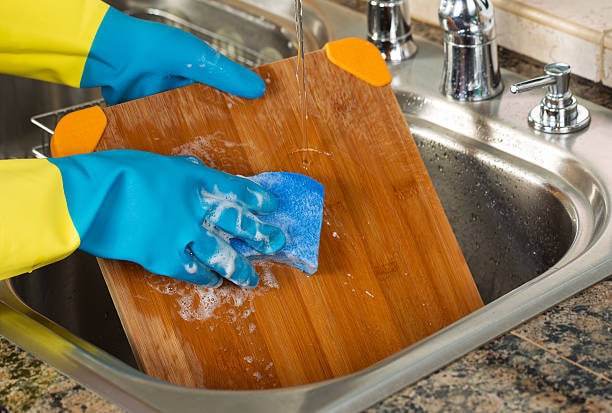
After getting all the necessary tools, you’re now ready to clean the teak wood board.
One of the most important things to learn is that you should always handwash the wooden cutting board. Avoid putting it in the dishwasher or leaving it in a sink full of water. Remember that excessive exposure to moisture may lead to hairline cracks and warping. Simply leave the wooden cutting board on your kitchen counter if you can’t clean it right away.
There may be instances when you don’t need to wash the entire board. For example, you’ve only sliced bread. In that case, brush off the crumbs and use a paper towel to keep the surface tidy.
If washing is necessary, you must first remove stuck-on food particles by using a metal spatula. Pour vinegar or sprinkle baking soda on stubborn stains. Gently rub the affected area to remove unwanted marks.
Then, wet the surface and soak the sponge in soapy water. Gently scrub the teak board with the sponge. Make sure to wash both sides of the wood to ensure even drying.
Thoroughly rinse the entire board until all the soapy residue is gone. Pat the surface dry with paper towels or a clean dish towel.
Finally, place the teak wooden cutting board upright on the counter to prevent residual water from pooling on its surface. Leave it to dry before storing it.
When Should You Apply Oil to Your Teak Cutting Board?
Besides washing, treating teak boards also involves applying oils. But how will you know when to oil the wood?
Here are some telltale signs that you need to oil the teak cutting board.
Dull or Discolored Surface
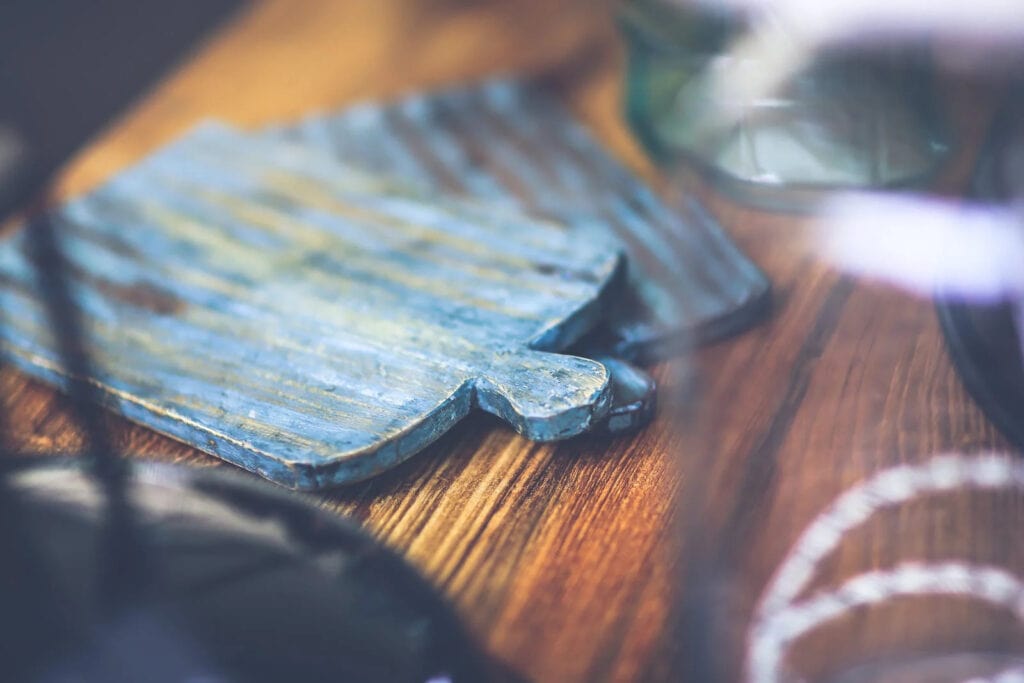
Teak is a naturally oily wood with a golden brown shade. So, if your chopping board looks dry, dull, or discolored, it implies that the surface needs oil. Oiling wooden cutting boards restore their natural beauty while preventing them from drying.
Visible Cracks or Splits

Teak wood is very durable and capable of withstanding cracks or splits.
However, if the natural teak oils have been depleted, the board could be susceptible to damage. Visible cracks and tears are obvious signs the wood needs oil. Give your board immediate attention because these defects can break the wood into several pieces.
Wood Absorbs Water
On top of being split-proof, teak wood cutting boards can effectively resist water. That means moisture doesn’t collect on the surface, even if you sprinkle a few drops of water on it.
But if your new teak cutting board quickly absorbs water, it’s a sign to oil the surface. Oiling prevents liquids from penetrating the wood, which can cause mold and warping.
Rough Texture
A rough wood texture indicates that your teak board needs oil. New teak feels smooth and slightly greasy to the touch. The surface eventually becomes coarse with every use. So, if you want to restore the slickness of wood, consider applying a new coat of food-grade mineral oil.
Rancid Smell
A well-oiled wooden cutting board shouldn’t smell rancid. If you notice that your board retains bad odors, it’s time to oil the wood.
Lighter Board
Genuine teak board feels sturdy and dense. But once the natural teak oil dries up, the material may feel lighter. Apply food-grade mineral oil to ensure the board stays hefty and balanced.
How to Apply Teak Oil Treatment to Your Cutting Board?
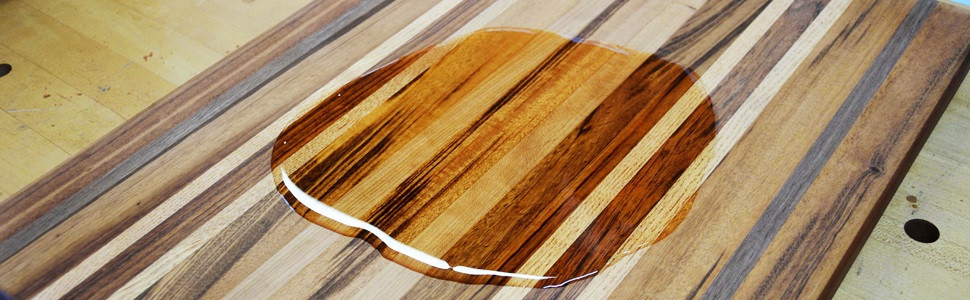
After knowing when to apply oil, the next thing to learn is how to use teak oil to treat cutting boards.
First, make sure that the surface is completely clean and dry.
Next, choose a food-safe oil or wax to put on the wood. Different individuals have unique needs and preferences. Personally, I use mineral oil because it is colorless and odorless.
Apply a generous amount of oil treatment to the cutting board using a clean cloth. Cover the board completely until it’s saturated with oil.
Leave the lubricant on the wood fibers for several minutes. You’ll notice that it slowly absorbs the product.
After ten minutes or so, pour the food-safe mineral oil on the teak cutting board again. Allow it to sit for a few hours.
Then, pat the board dry with a clean cloth to remove excess oil. Repeat the process on all the other sides of the board.
Remember to re-oil the wood occasionally to keep the board in excellent condition and prolong its lifespan.
Conclusion
Although teak cutting boards are durable and moisture-resistant, they may become brittle and weak with constant use and washing. Treating wood boards is essential to maintain their strength.
To treat a teak cutting board, you must regularly clean and oil the wood. Cleaning involves washing the board with dish soap or a vinegar solution, depending on the severity of the stains. Meanwhile, oiling must include a food-safe product, such as mineral oil or beeswax. Apply a generous amount of oil before wiping the excess product.
Did you find this post helpful? Visit our blog page for other articles about teak wood!